
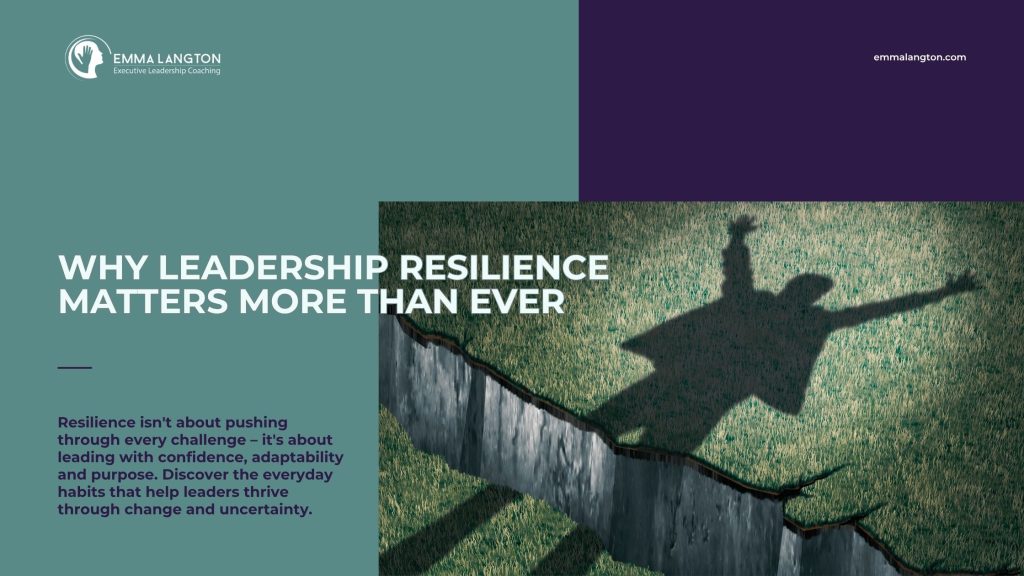
Leadership has always come with its challenges, but today’s leaders are navigating increasing complexity, constant change and higher expectations than ever before. While technical expertise and strategic thinking remain essential, one quality has become increasingly important for leading effectively through uncertainty: resilience.
According to the World Health Organization, poor working environments – including excessive workloads, low job control and job insecurity – pose significant risks to mental health while safe and healthy workplaces improve work performance and productivity. This reinforces the need for leaders who can adapt, recover and lead with confidence in demanding environments. Rather than simply enduring pressure, resilient leaders develop the habits and mindset needed to sustain both their own wellbeing and the performance of their teams.
Throughout several episodes of the Lessons for Leaders podcast, leadership coach Emma Langton explores what it really means to become a resilient leader. Drawing on practical experience and actionable strategies, she explains that resilience isn’t something we are born with. Instead, it’s a skill that can be strengthened through intentional habits, self-awareness and regular opportunities to recharge. In this blog, we will explore why leadership resilience matters more than ever, the habits that help leaders remain effective through change and practical ways to build resilience for long-term leadership success.
Resilience Is Built, Not Born
Resilience is often misunderstood as simply being able to ‘push through’ difficult situations or remain unaffected by pressure. However, as Emma Langton explains, true leadership isn’t about ignoring challenges or pretending everything is under control. It’s about responding to setbacks with adaptability, maintaining perspective and continuing to lead with purpose, even when circumstances are uncertain.
One of Emma’s key messages is that resilience isn’t a fixed personality trait – it’s a skill that can be developed over time. Every experience, challenge and setback presents an opportunity to strengthen resilience, provided leaders are willing to reflect, learn and adapt. Rather than striving for perfection, resilient leaders focus on continuous growth, recognising that setbacks are an inevitable part of leadership. Developing resilience also means understanding that leadership isn’t about having all the answers. It’s about creating the confidence to navigate uncertainty, make thoughtful decisions under pressure and remain a steady presence for the people around you. As Emma highlights in the podcast, resilience has become one of the defining qualities of effective leadership, with some experts even suggesting that it may be the new criterion for professional advancement.
The Everyday Habits of Resilient Leaders
If resilience is something that can be developed, the next question is: how do leaders build it? Throughout the Lessons for Leaders podcast, Emma Langton emphasises that resilience isn’t created through one significant moment or major achievement. Instead, it’s strengthened through the small, consistent habits leaders practise every day.
One of the most important habits is self-awareness. Resilient leaders take time to recognise how they’re responding to pressure, understand what affects their energy and identify when they need to pause, reflect or adjust their approach. This awareness allows them to respond thoughtfully rather than react emotionally, helping them make better decisions for themselves and their teams.
Emma also highlights the importance of managing energy, not just time. While many leaders focus on packed calendars and endless to-do lists, sustainable leadership depends on having the physical and mental capacity to perform at your best. Prioritising recovery, creating space to think and building moments of rest into the working week aren’t signs of weakness; they’re essential practices that help leaders remain effective over the long term. Finally, resilient leaders understand that recharging isn’t something to save for annual leave. It’s an ongoing leadership habit that should be incorporated daily. Whether it’s taking time to reflect, setting aside moments to disconnect or simply recognising when your resilience needs replenishing, these small actions create the foundation for consistent, confident leadership. As Emma explains, investing in your own resilience isn’t just beneficial for you; it’s one of the most important ways you can show up for your team.
Why Resilient Leaders Create Stronger Teams
Leadership resilience doesn’t just benefit the individual leader – it shapes the experience of everyone around them. The way leaders respond to pressure, navigate uncertainty and manage change sets the tone for their teams. When leaders demonstrate resilience, they create an environment where people feel supported, valued and more confident in tackling challenges themselves.
Resilient leaders are also better equipped to communicate clearly, make thoughtful decisions and remain calm during periods of uncertainty. Rather than reacting impulsively to setbacks, they respond with perspective and purpose, helping build trust and psychological safety within their teams. This consistency gives people confidence, even when circumstances are changing. Throughout the Lessons for Leaders podcast, Emma Langton reinforces the idea that investing in your own resilience isn’t about putting yourself first; it’s about becoming the kind of leader others can rely on. By prioritising self-awareness, protecting your energy and making time to recharge, you’re better positioned to support your team, inspire confidence and lead with clarity over the long term.
Building Leadership Resilience for Long-Term Success
Leadership will always bring challenges, but resilience determines how leaders respond to them. Rather than striving to avoid setbacks or eliminate pressure altogether, resilient leaders focus on developing the mindset, habits and self-awareness needed to navigate change with confidence. It’s this ability to adapt, recover and continue moving forward that enables leaders to perform consistently while supporting the people around them.
As Emma Langton explains throughout the Lessons for Leaders podcast, resilience isn’t something built only during difficult times. It’s developed through the everyday choices leaders make: taking time to reflect, protecting their energy and recognising the importance of regular recovery. These intentional habits not only strengthen personal resilience but also create healthier, more engaged and higher-performing teams.
Ultimately, leadership resilience isn’t about doing more or working harder. It’s about leading in a way that’s sustainable, allowing you to remain effective, adaptable and present throughout your leadership journey. By investing in your own resilience, you’re investing in your ability to lead others with confidence, compassion and long-term impact.
Learn More About Leadership Resilience with Emma Langton
If you’d like to explore leadership resilience in more depth, Emma Langton shares practical advice, coaching insights and real-world leadership strategies throughout her Lessons for Leaders podcast. Drawing on her experience as a leadership coach and workplace wellbeing specialist, Emma helps leaders build resilience, navigate change with confidence and create healthier, high-performing workplace cultures.
This blog was inspired by three episodes of the Lessons for Leaders podcast, where Emma explores why resilience is a leadership skill that can be developed through intentional habits, self-awareness and regular opportunities to recharge.
Featured Episodes:
🎙️ Preventing Leadership Fatigue and Burnout
🎙️ How to Recharge Your Resilience Levels
About Emma Langton

Emma Langton is a leadership coach, trainer and founder of Emma Langton Ltd, helping SME leaders and organisations develop confident, people-focused leadership that creates lasting impact.
Through leadership coaching, workshops, training programmes and the Lessons for Leaders podcast, Emma supports leaders to strengthen their mindset, improve communication, develop emotional intelligence and build workplace cultures where both people and performance thrive.
If you’re looking to develop your leadership skills, support your team or create a more engaged workplace, visit https://emmalangton.com to learn more about Emma’s coaching, leadership programmes and workshops.
Connect with Emma
Website: https://emmalangton.com
LinkedIn: Emma Langton – Executive Leadership Coach
Company page: Elevating Leadership Performance and Wellbeing
Podcast: Lessons for Leaders




0 Comments